



Home · Outdoor
Concrete Outdoor Furniture
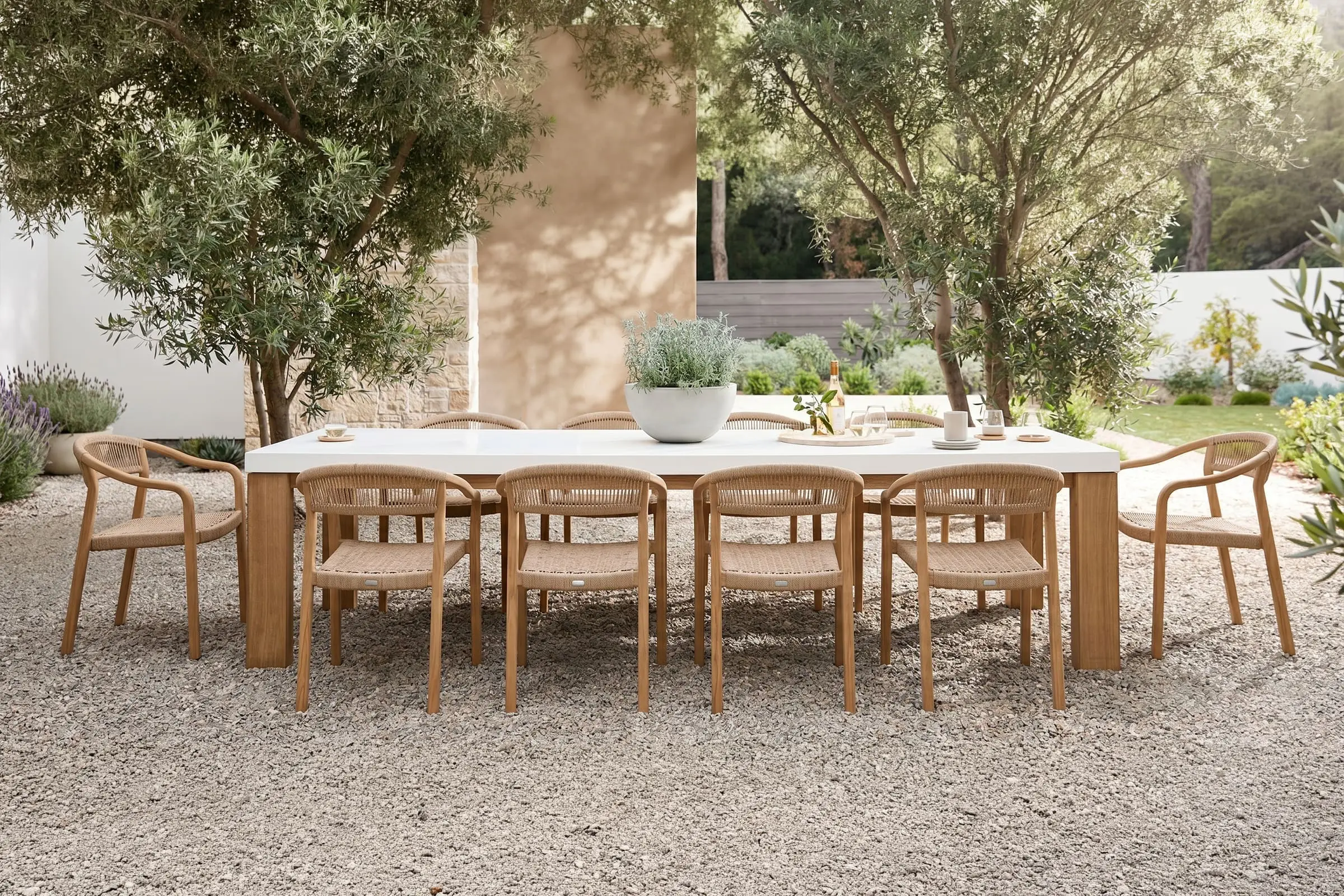
Concrete outdoor furniture built for Australian sun, salt and four-seasons exposure: outdoor dining tables, bench seats, bar tables, BBQ benchtops and pool-side pieces. Cast at our Melbourne workshop from a silica-free, freeze-thaw stable composition and delivered nationally. Everything is made to order in 4 to 6 weeks from sign-off, so the size and colour are yours rather than whatever happened to be in stock.
We over-specify our concrete outdoor furniture for Australia's harshest outdoor conditions. The exact same specification ships for our indoor tables.
Every outdoor concrete table, bench seat and BBQ benchtop leaves the workshop in the same composition: silica-free, freeze-thaw stable, coloured with UV-stabilised oxides. Steel bases are galvanised and zinc-coated. The sealer is satin, food-safe and resists red wine for six hours. It is the spec we build for pool decks, alfresco rooms and coastal terraces — and the same one that ships on an indoor dining table or a kitchen island. One build, one standard.
All Concrete Outdoor Tables
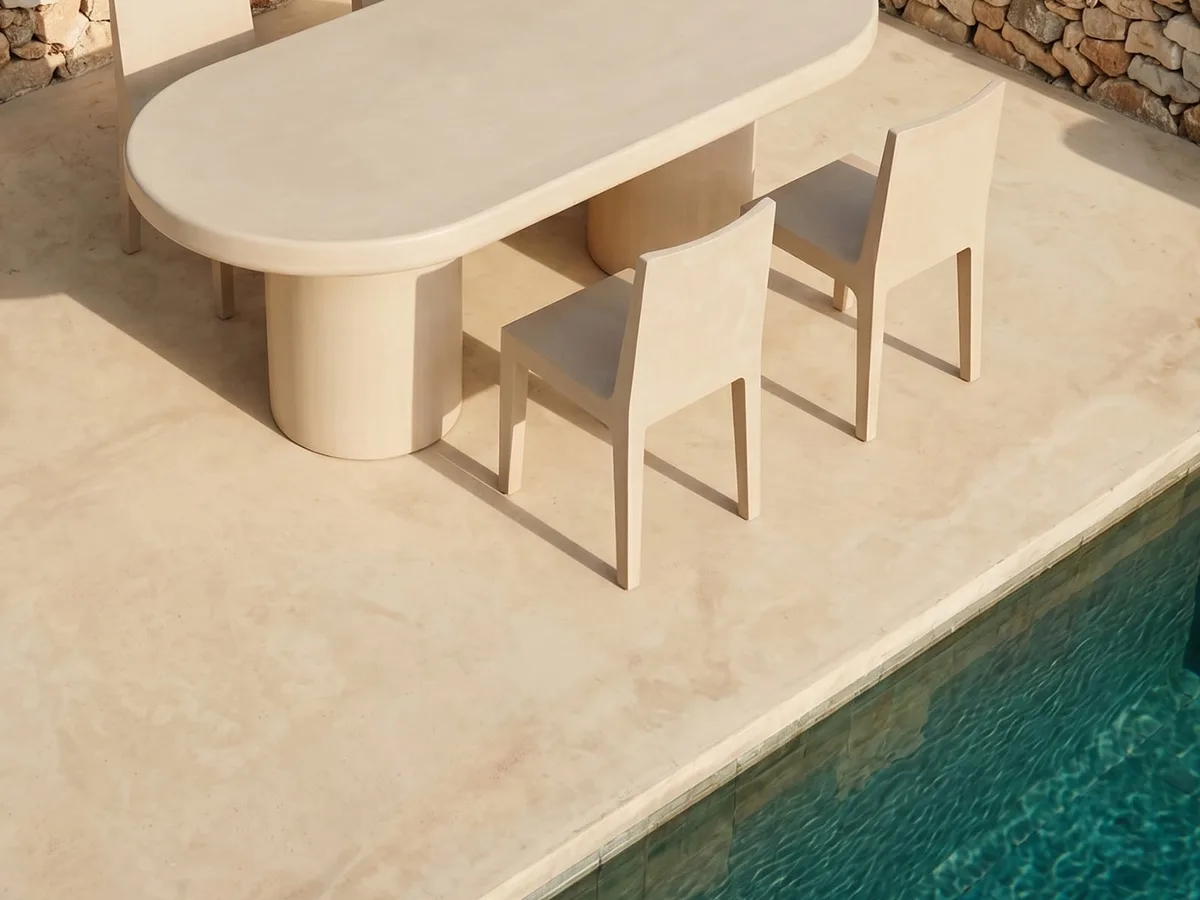
Every concrete outdoor table from our range, whether it's a small coffee table through to our largest concrete dining table. This includes every piece of concrete furniture which we recommend for full outdoor exposure. An ideal page if you want the whole outdoor-tables range in one place.
Browse ›
Outdoor Dining Tables
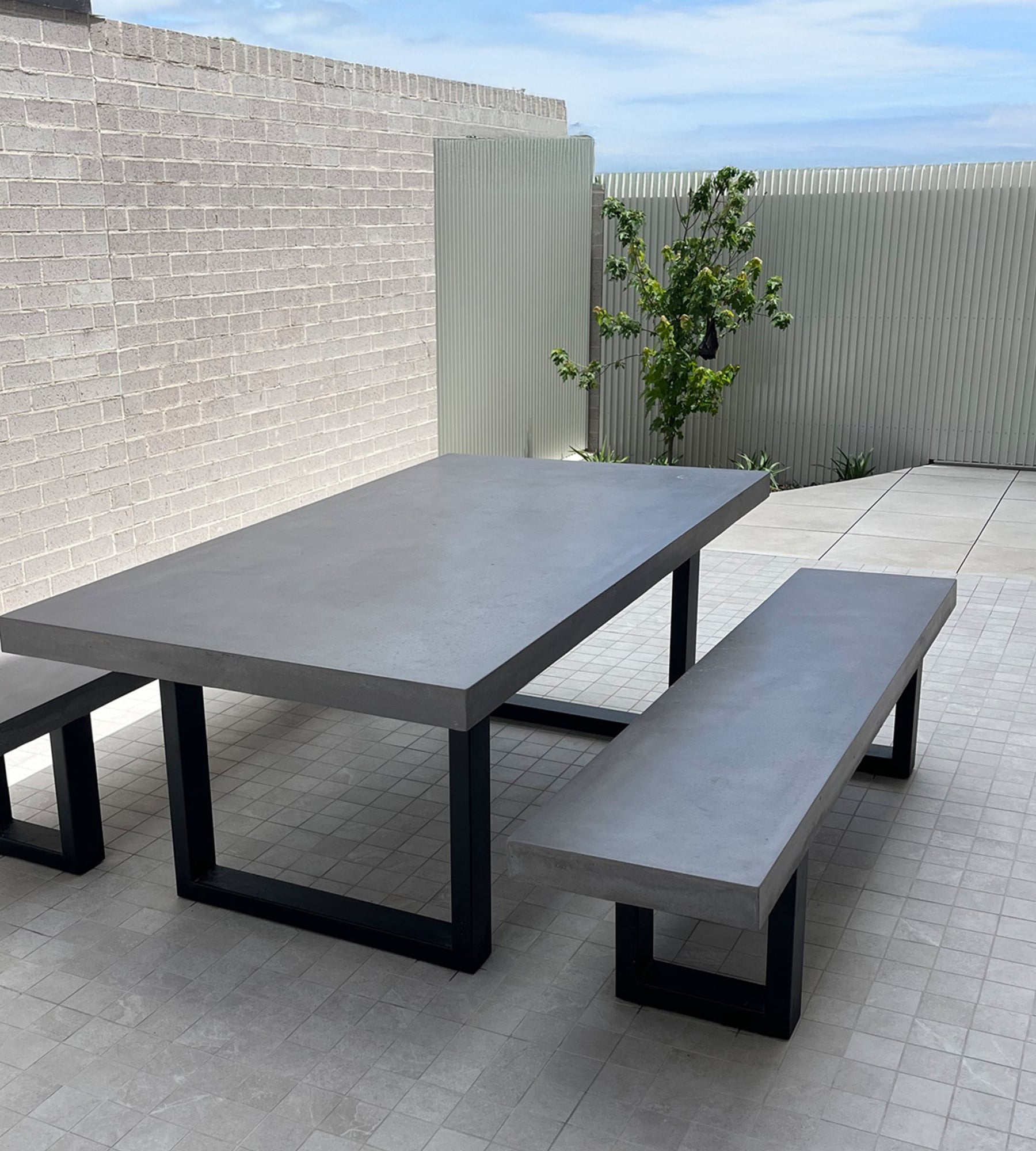
This list includes outdoor dining tables made with steel legs for full weather exposure or timber legs for outdoor undercover applications. Every indoor table in this range is specified for outdoor conditions through our over-engineering of the tabletop sealer and the concrete composition.
Browse ›
Outdoor Bench Seats
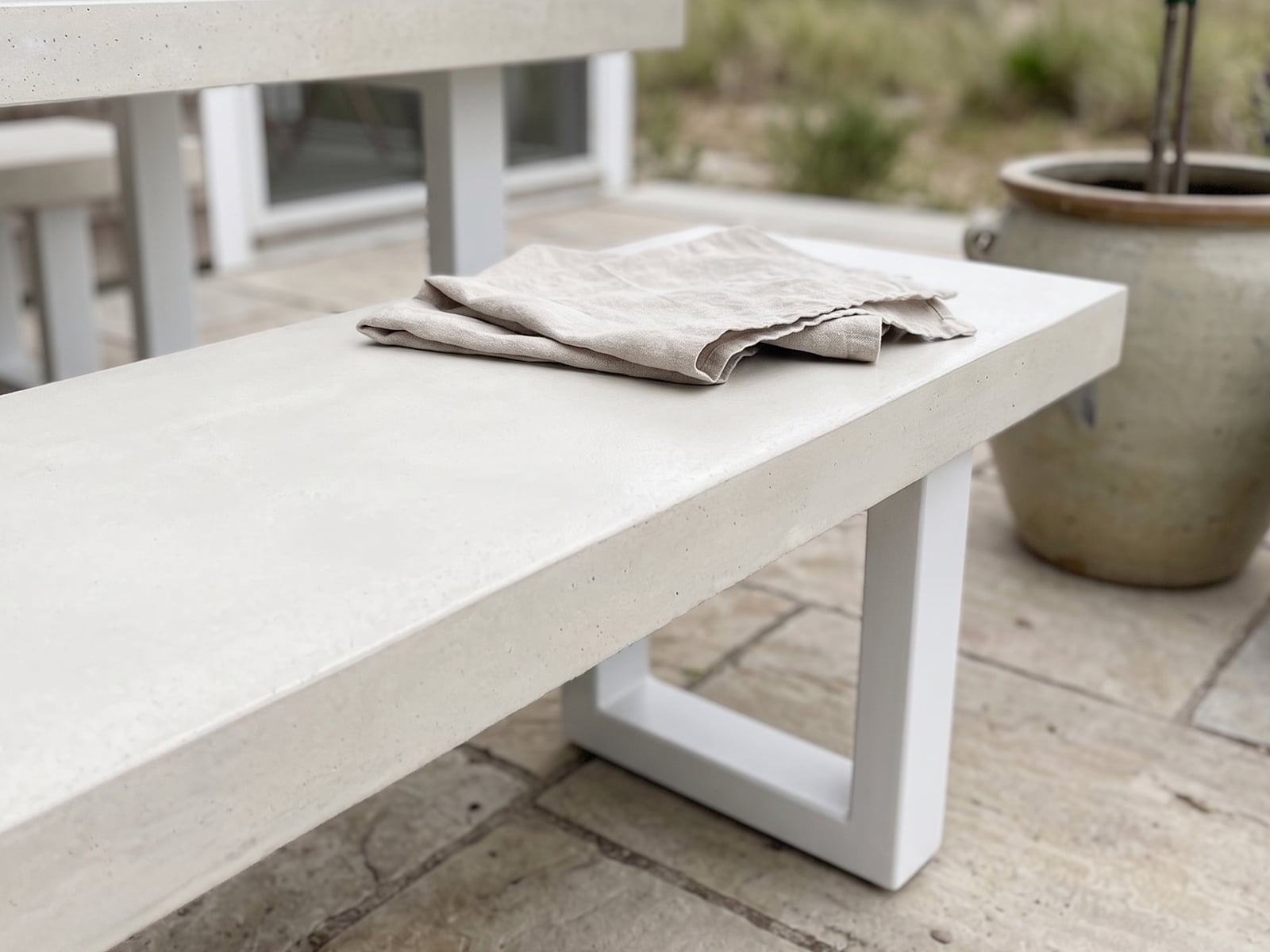
Pair the dining table with a matching concrete bench. The steel legs are suitable for full weather exposure and cast in the same finish as the tabletop for a matching aesthetic.
Browse ›
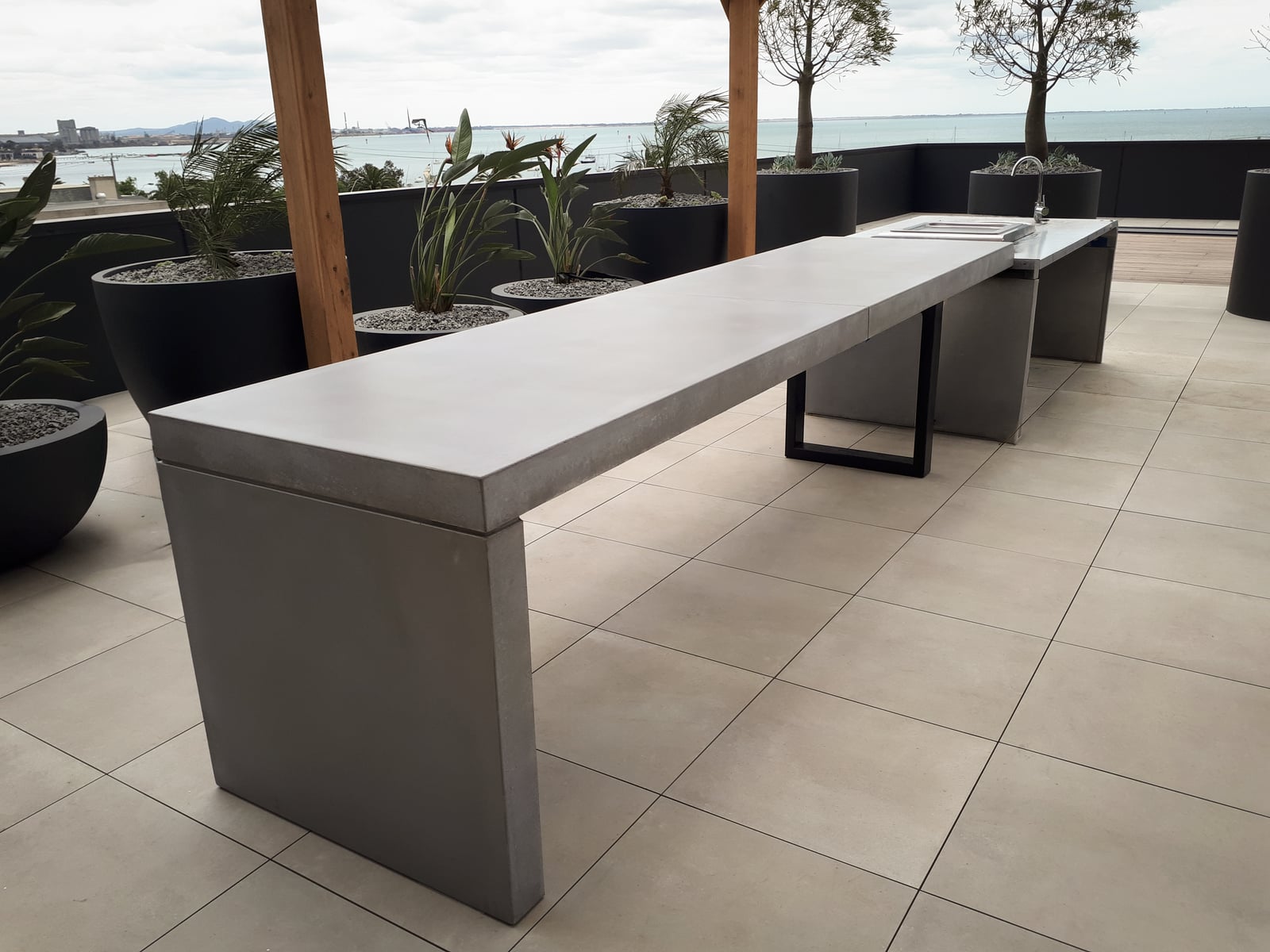
BBQ Benchtops & Outdoor Kitchens
Concrete benchtops for built-in BBQ stations, pool-side bars, and full outdoor kitchens.
Browse ›
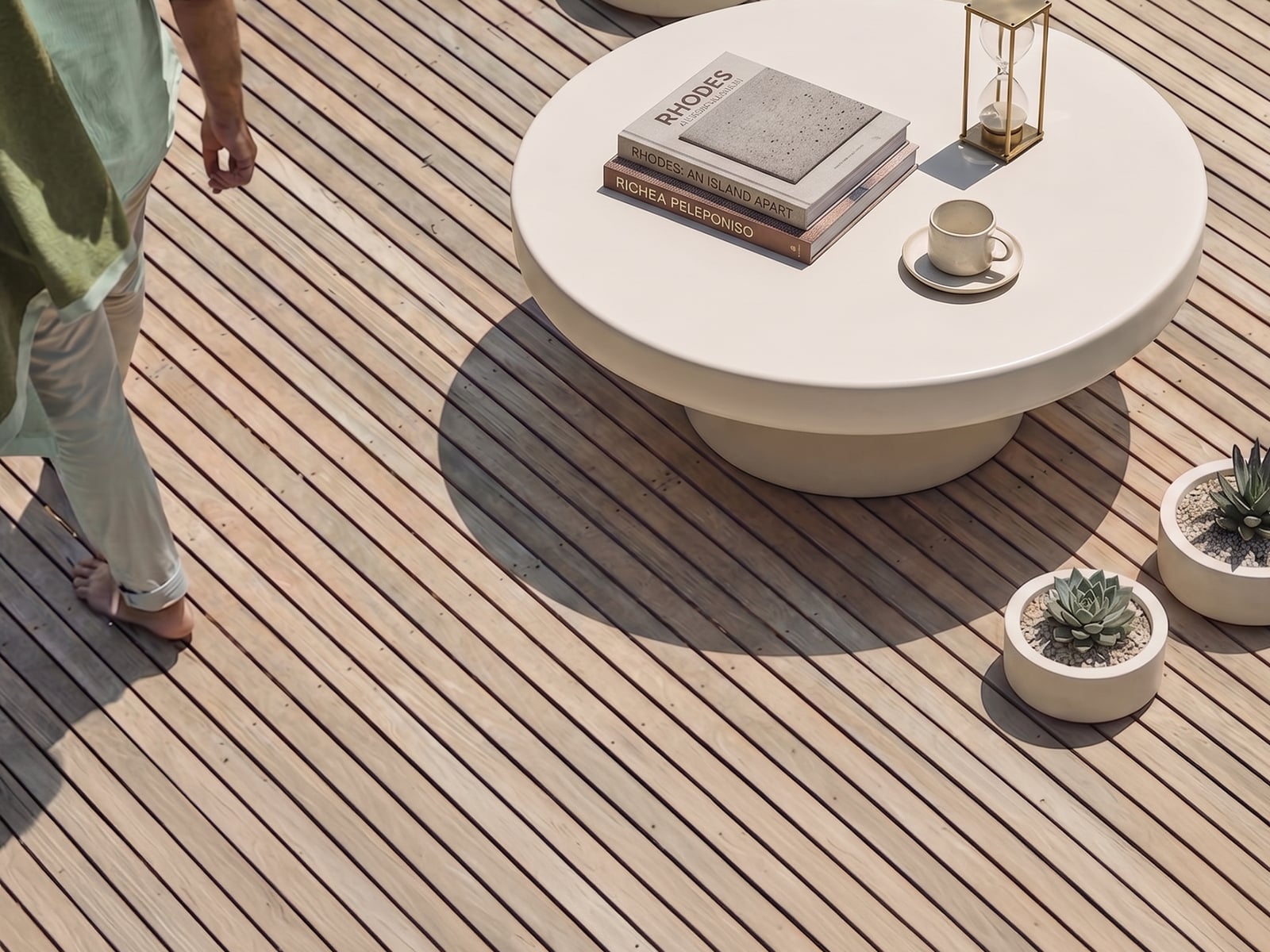
Outdoor Concrete Coffee Tables
Concrete outdoor coffee tables: smaller pieces for courtyards, balconies and pool decks, cast in the same colour range as the dining tables.
Browse ›
Outdoor Bar Tables
Standing-height concrete for pool bars and alfresco entertaining. The IronStone bar runs an 80 mm top on a galvanised steel base; the Santino sits on locking casters so it can be wheeled into place.
Browse ›
Outdoor Side Tables
Small-format concrete for planted nooks, lounge ends and balcony corners. Cast from the same composition as the dining range, sized to sit low against the planting.
Browse ›
01 / Form
Outdoor Concrete Tables
Outdoor concrete tables cover dining, coffee, side and bar formats from one composition: silica-free, freeze-thaw stable, coloured with UV-stabilised oxides and finished with a satin food-safe sealer that resists red wine for six hours. What changes between pieces is the base.
For full exposure the steel-based tables are the default. The IronStone dining table is the one most outdoor briefs land on — an 80 mm top on a galvanised, powdercoated base, from 1800 to 3600 mm. The IronCross runs the same construction with a cross-braced frame, and comes round and square as well as rectangular.
Where the brief wants no visible metal, the pedestal tables carry the top on cast concrete instead: the Palermo oval, the Athina round and the Milano rectangular. Same slab, same sealer — a heavier, quieter look that suits a paved terrace or a poolside setting.
Browse every outdoor table ›02 / Form
Outdoor Concrete Seating
Bench seats are 450 mm wide as standard, 1000 to 2700 mm long, with an 80 mm top. The IronStone bench sits on the same galvanised steel base as the dining table, which is why the two are usually ordered together.
A bench does two jobs outdoors. Pulled up to the table it seats three where chairs would seat two, and it slides away underneath when the terrace needs the space back. Left standing on its own against a wall or a planted edge, it reads more like a landscape element than furniture. The TimberStone bench pairs the same top with a Tasmanian oak base for sheltered alfresco positions.
Order a setting — table plus benches — and both are cast in one batch, so the colour and finish match properly rather than approximately. Custom widths are quoted on request. For council, civic and public-realm work, see commercial seating.
Browse bench seats ›03 / Form
Bar height for outdoor entertaining
A concrete bar table outdoors does something a dining table can't: it puts people at standing height, facing the cook, without anyone committing to a seat. It is the piece that suits a pool bar, a rooftop, or the end of a run of BBQ cabinetry.
The IronStone outdoor bar table is the full-exposure option — an 80 mm top on the same galvanised, powdercoated base as the dining range, from 1800 to 3000 mm long. It is built to stand outside permanently and be left there.
The Santino takes a different approach: a 40 mm top, with a 60 mm option, on a powdercoated steel frame that rolls on commercial locking casters. It is designed to be moved — wheeled out for an event and parked under cover afterwards — which makes it a hospitality piece more than a permanently exposed one.
Browse bar tables ›04 / Setting
Patio, garden and poolside
The same pieces read differently depending on where they land. Concrete patio furniture sits in a built outdoor room and behaves like indoor furniture that happens to be outside. Concrete garden furniture sits against planting, where it works as much like a landscape element as a table.
On a patio or in an alfresco room, the format is usually a dining table with benches, plus a coffee or side piece at the lounge end. Australian alfresco rooms tend to be narrower than people expect, so a 1000 mm wide top with benches that tuck fully underneath is often the difference between a room that works and one you edge around.
In a garden the pieces get longer and lower: a bench lining a hedge run, a side table tucked against a wall, a pedestal table at the end of a path. Poolside is its own case — splash-out, sunscreen and wet feet all day — and it is where we most often specify a marine-grade powdercoat on the base, or 316 stainless where salinity and ocean spray are severe.
Browse garden furniture ›05 / Setting
Outdoor Kitchens & BBQ Benchtops
Concrete benchtops for built-in BBQ stations, outdoor kitchens and pool-side bars. Templated against your installed cabinetry, cast full-depth, and sealed for food prep.
Grill cut-outs are cast in at the workshop rather than cut on site, matched to the radius and hood clearance of your specific unit — Beefeater, Weber Summit, Lynx, DCS and Napoleon are all common. The cut-out is finished and sealed exactly like the rest of the top, so the join reads as a detail rather than a repair.
Sinks are the one thing we don't cast in. They sit in stainless adjacent to the slab, because a sink cast into concrete puts a permanent wet zone in the middle of the surface, and that is the failure we see most often in other people's work.
Browse BBQ benchtops ›06 / Choosing
IronStone or TimberStone: choosing a base
The concrete doesn't change between an indoor piece and an outdoor one. The base does, and that is the decision worth spending time on.
IronStone is the outdoor default. The steel is galvanised and zinc-coated before it is powdercoated, so the corrosion protection is in the metal rather than only in the finish. For coastal and pool-side positions we specify a marine-grade powdercoat. Where salinity or ocean spray is severe — a beachfront terrace, a job near constant surf — we build the base in 316 stainless steel instead.
TimberStone carries the identical top on a Tasmanian oak base. It belongs indoors or under cover on a roofed alfresco. Left in full weather the concrete is untroubled, but the timber will grey and want work. Oak outdoors takes a re-oil or a fresh coat of varnish from time to time; that is the only ongoing maintenance anywhere in the range, and it applies to the base, never the concrete.
The third option is no visible base at all: the Milano, Palermo and Athina tables carry the top on a cast concrete pedestal, which suits full exposure and reads heavier and quieter than steel.
Compare the dining range ›07 / Specifying
Sizes and thickness
There is no single SnapCo thickness. It is set per piece, because a coffee table and a 3600 mm dining table are solving different problems.
| Piece | Top | Base |
|---|---|---|
| IronStone dining | 80 mm · 1800–3600 mm | Galvanised steel |
| IronCross round | 80 mm · Ø1000–1800 mm | Galvanised steel |
| Palermo oval | 80 mm · 1800–3600 mm | Concrete pedestal |
| IronStone bench | 80 mm · 1000–2700 × 450 mm | Galvanised steel |
| IronStone bar | 80 mm · 1800–3000 mm | Galvanised steel |
| Milano coffee | 40 mm (60 mm option) · Ø1000–1200 mm | Concrete pedestal |
| Laconian dining | 50 mm | Tasmanian oak — covered use |
3600 mm is the largest standard table, and we cast to 4000 mm regularly enough that it is not an unusual request. Anything beyond the standard sizes is a change of mould rather than a special project, so ask.
06 / Buying guide
Specifying outdoor concrete: what 'over-specified' actually means.
Most concrete furniture you see in design press is indoor concrete shot outdoors for the photoshoot. That's fine for an editorial spread, less fine for a piece that has to live on your patio through five Australian winters. Polished concrete outdoor table, cement outdoor table, IronStone or Milano — the labels vary, the question doesn't: was the piece engineered for outdoor exposure, or just styled there? We don't run a separate indoor build to step down to. Composition, sealer, pigment palette and base hardware are engineered to the outdoor brief and shipped to the same spec whether the piece lives by a pool or in a dining room. Here's what that looks like in practice.
Colour
Colour goes through the mix rather than sitting on top as a coating, and every oxide we use is UV-stabilised. That combination is why an outdoor piece looks the same in its fifth summer as its first — there is no surface layer to wear back and expose a different colour underneath. Screens are unreliable for concrete, so if you are deciding between finishes, look at the range on the concrete colours page and then look at it in the position it is going to live in, at the time of day you will actually use it.
Seal and maintenance
The same satin, food-safe sealer ships on every piece, indoors or out. It resists red wine for six hours. There is no annual routine for the concrete — wipe spills when they happen and that is genuinely the whole of it. The exception is a Tasmanian oak base, which takes a re-oil or a fresh coat of varnish from time to time. See the care guide for the detail.
Base and install
The base is where an outdoor spec shows. Galvanised, zinc-coated steel is the default, powdercoated to finish. Pool-side and coastal positions get a marine-grade powdercoat, and where salinity or ocean spray is severe we build the base in 316 stainless steel. Cast concrete pedestals suit the Milano, Palermo and Athina tables. Tasmanian oak is for sheltered patios and indoor pieces.
Climate notes
Three Australian briefs we build for most often. Melbourne metro is the straightforward one and the standard spec holds without compromise. In Sydney and on the Gold Coast the marine-grade steelwork is what handles salt air. Inland and alpine Victoria is where the freeze-thaw stable composition does the real work, because that is the condition that splits ordinary concrete.
Material / Outdoor-rated composition
Cast for Australian sun, salt, and four-seasons exposure.
What we cast is Glass Fibre Reinforced Concrete — architectural concrete, not the material a slab or a driveway is made from. Its high flexural strength, roughly four times that of standard concrete, is what lets a top be cast thin and still take the span.
That is also why these pieces are moveable. Replacing the aggregate and steel of traditional concrete with high-performance polymers and glass fibre brings the weight down to around a third of what the same piece would otherwise weigh. Less material, low waste, no harmful by-products.
It is silica-free and freeze-thaw stable, and it is made by hand, so there is variation between casts. We treat that as part of the material rather than a defect to be engineered out.
Common Questions
Concrete outdoor furniture: what people ask.
-
What makes SnapCo's concrete suitable for outdoor use? +
We use the same composition indoors and out: silica-free GFRC, roughly four times the flexural strength of standard concrete. The oxides that colour it are UV-stabilised, so the colour holds in full sun. The composition is freeze-thaw stable, so Australian winters won't crack the cast, and the satin food-safe sealer resists red wine for six hours. Same studio standard either way.
-
How long does outdoor concrete hold its colour? +
Every oxide we use is UV-stabilised, and colour goes right through the mix rather than sitting on the surface as a coating. Pieces that have stood in full Australian sun for years still read the same. The one thing that does want attention is a Tasmanian oak base, which takes a re-oil or a fresh coat of varnish from time to time.
-
Does outdoor concrete need to be sealed every year? +
No. The studio sealer is built for ordinary outdoor exposure and there is no annual routine to keep up with. Wipe spills, and that is genuinely it for the concrete. If your piece stands on a Tasmanian oak base, the timber is the part that occasionally wants re-oiling.
-
Can outdoor concrete furniture stay out in winter? +
Yes. The composition is freeze-thaw stable, which is the property that matters when water gets into a surface and then freezes. Inland and alpine Victoria is where that does the real work. You don't need to bring the piece in or cover it.
-
Which base should I choose for full exposure? +
IronStone is the outdoor default: galvanised, zinc-coated steel, powdercoated. For coastal and pool-side positions we specify a marine-grade powdercoat, and where salinity or ocean spray is severe we build the base in 316 stainless steel. Cast concrete pedestals suit the Milano, Palermo and Athina tables. A Tasmanian oak base is for sheltered alfresco or indoors.
-
What thickness is the concrete? +
It depends on the piece, and we don't quote a single figure across the range. Dining tables, bench seats and the IronStone bar are 80 mm. The Milano coffee table is 40 mm with a 60 mm option. The Laconian range is 50 mm. Every product page lists its own thickness.
-
How wide are the bench seats? +
Bench width is 450 mm standard, with lengths from 1000 to 2700 mm and an 80 mm top. Custom widths are quoted on request. Benches are usually ordered with a matching dining table so the two are cast together.
-
Do you make outdoor sets (table plus bench plus coffee table)? +
Yes, and it's the better way to order. Multiple pieces ordered together are cast in one batch with the same pigment, the same finish and the same cure date, so they match properly. It can also reduce freight where pieces share a delivery.
-
Can I get a custom size? +
Yes. Everything is cast to order, so a different size is a change of mould rather than a special project. Our largest standard table is 3600 mm and we regularly cast to 4000 mm. Send the studio your dimensions and we'll quote off them.
-
How long does an outdoor piece take to make? +
4 to 6 weeks from sign-off. Everything is made to order at our Melbourne workshop and delivered nationally, so nothing ships from stock.
Custom
Sizes that fit the space you actually have
Because every piece is cast to order, a size outside the standard range is a change of mould rather than a special project. It is a normal thing to ask for, not an exception we grudgingly make.
Outdoor spaces are rarely the tidy dimensions furniture is built to. A terrace is 300 mm narrower than the table that would suit it, a courtyard has a step in one corner, a bench needs to stop short of a downpipe. Those constraints decide the piece. Send the studio the dimensions of the space and how you want to use it, and we will quote off that — see custom-built concrete tables or custom-built furniture for how that works.
Made to order, 4 to 6 weeks from sign-off, delivered nationally from our Melbourne workshop.