


Home · Furniture · Coffee Tables
Concrete Coffee Tables
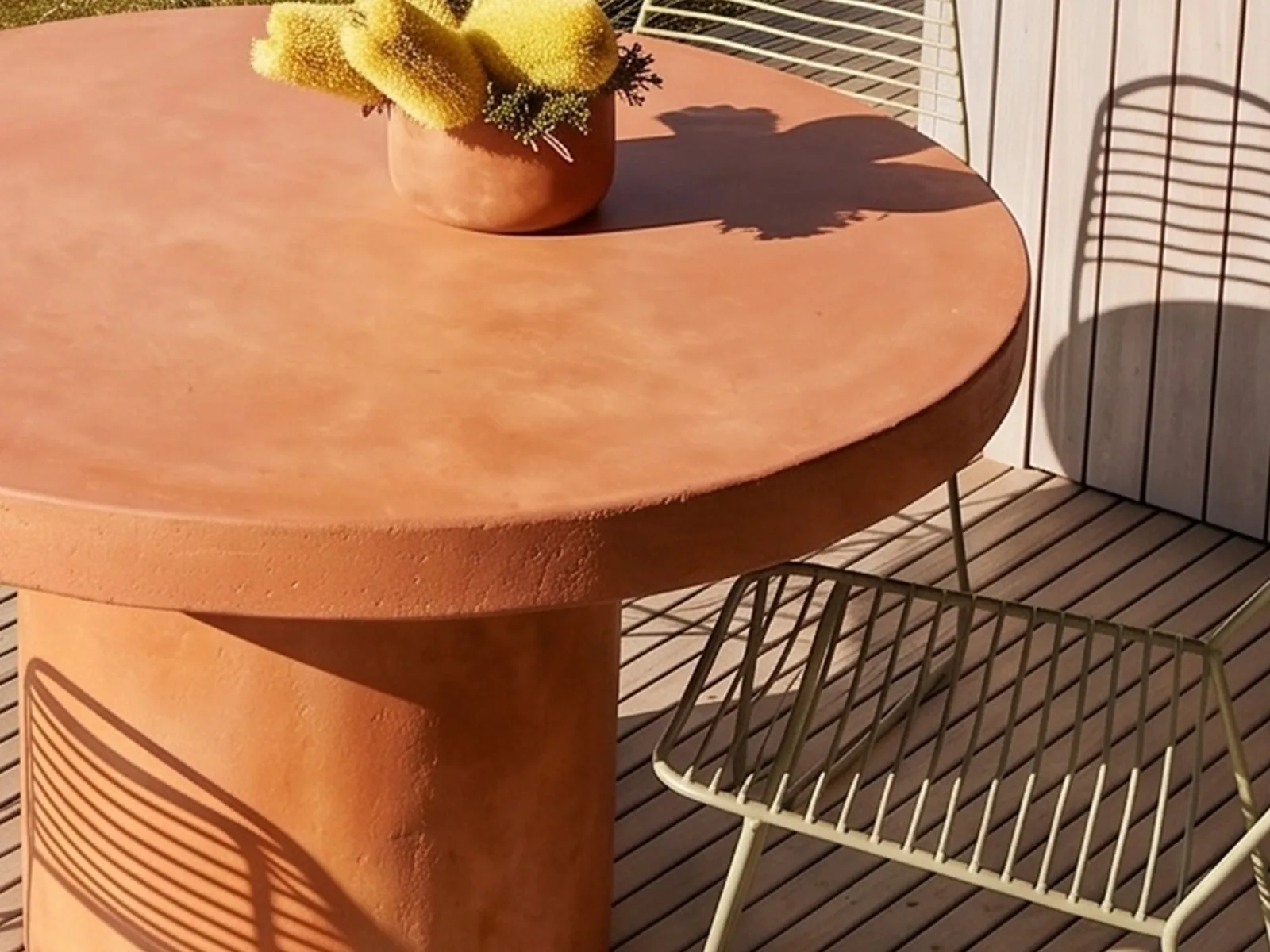
Round or rectangular, in the colour you choose. Cast full-depth at our Melbourne workshop and delivered nationally, at about a third the weight of traditional concrete. Concrete coffee tables are the only pieces in our range you can buy direct through the site (flat-rate freight to five capitals); everything else is quoted by the studio.
01 / Form
Round Concrete Coffee Tables
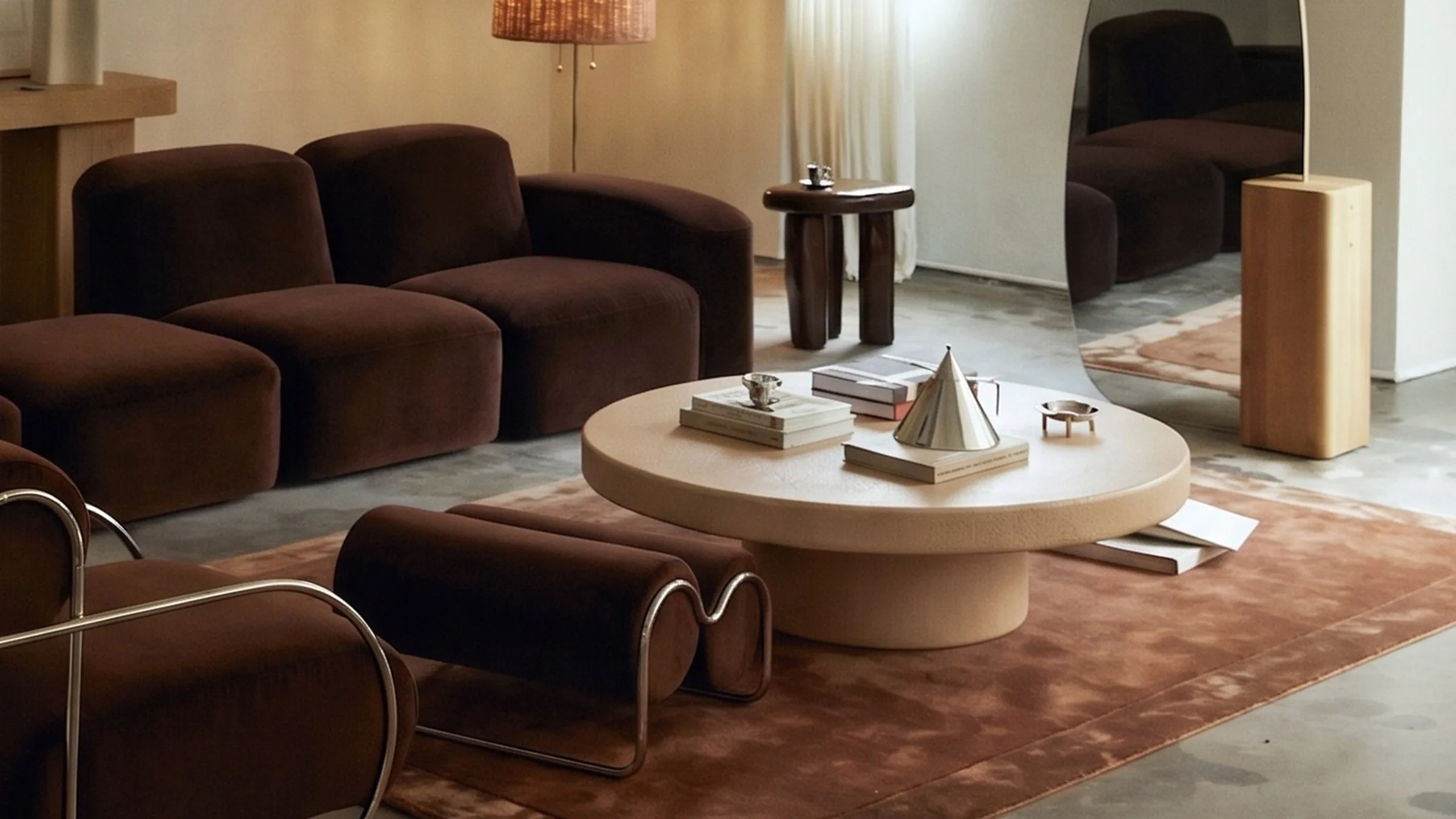
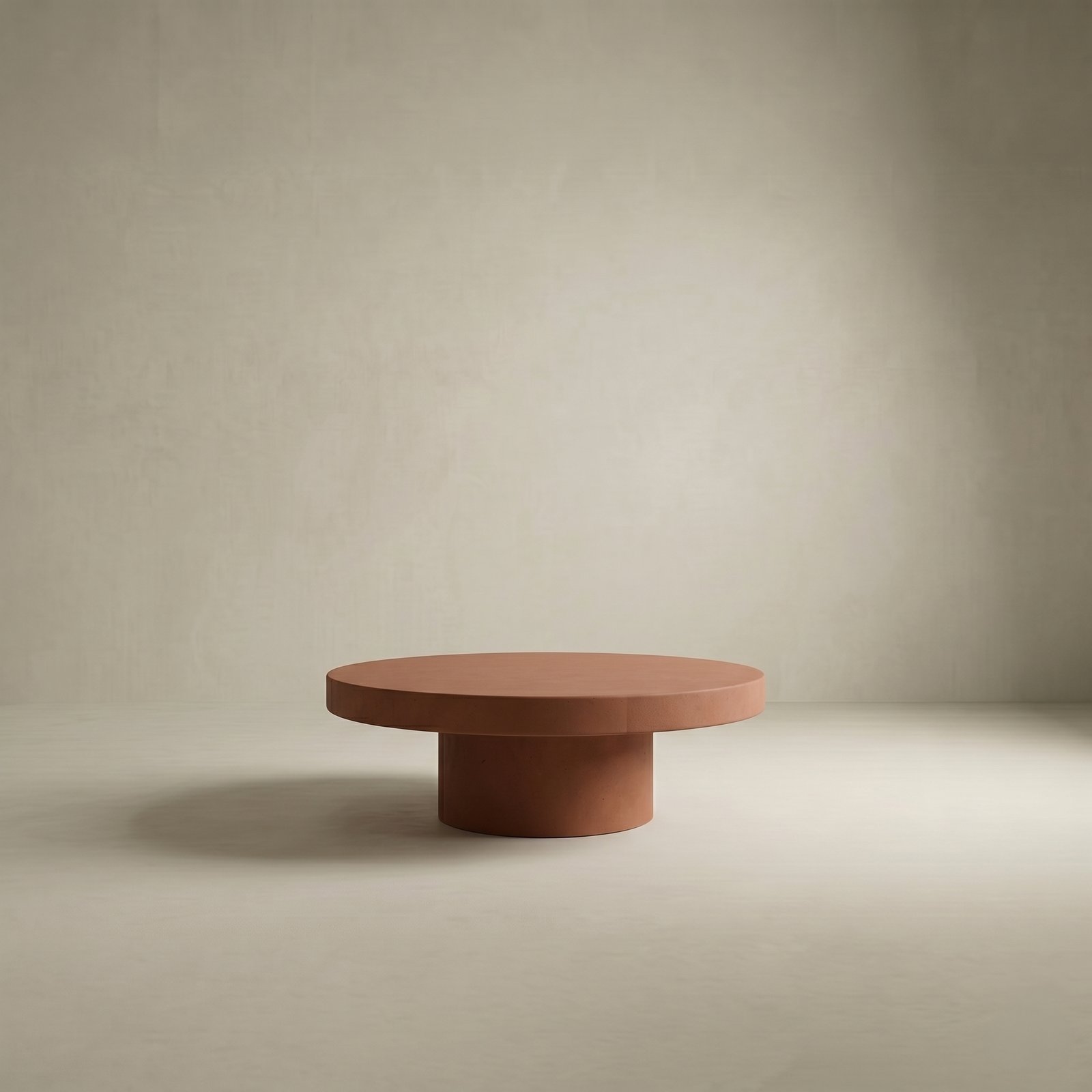
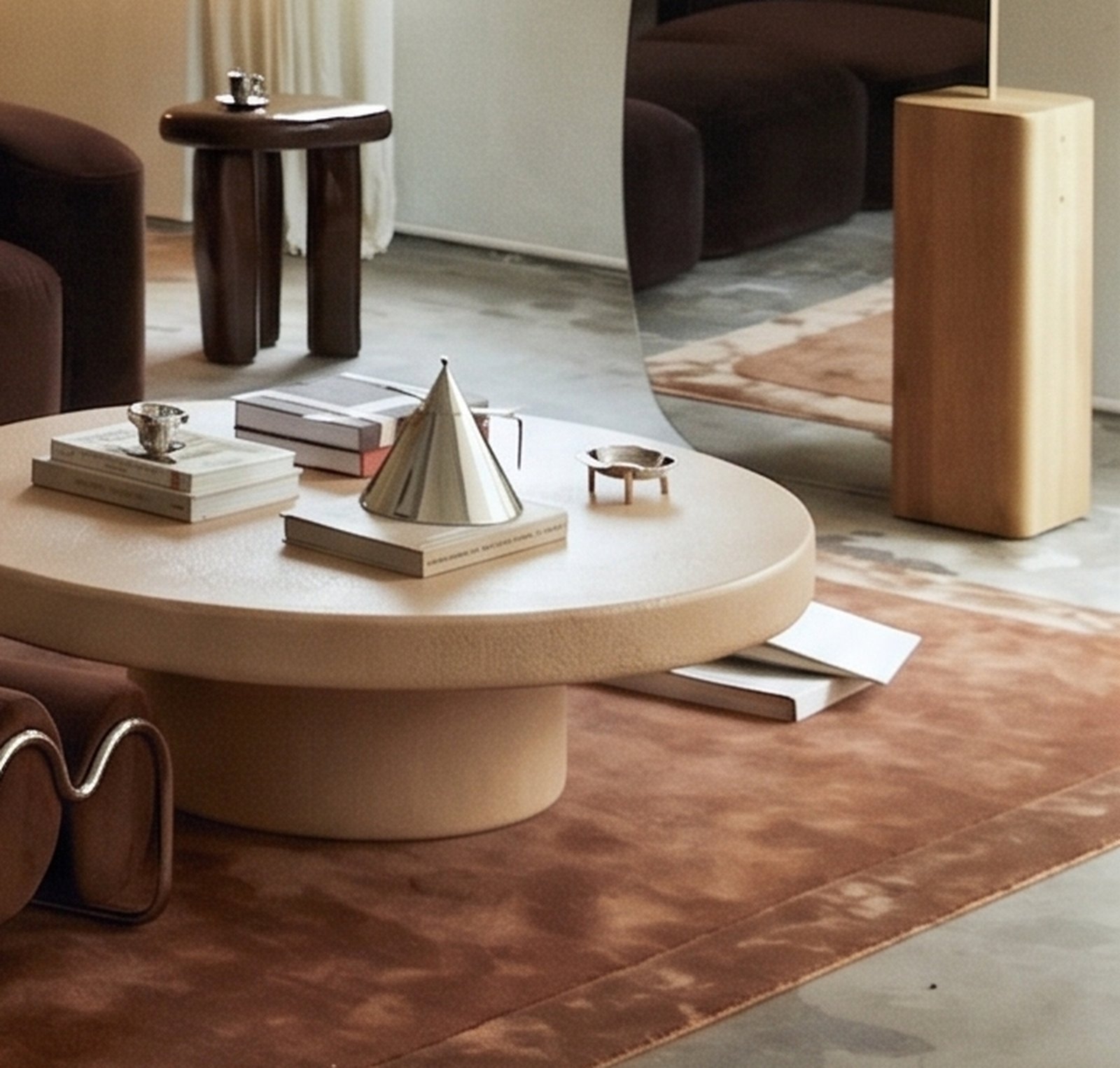
A round concrete coffee table reads softer in a living room and works well between sofas without a hard edge. No corners at shin height either, which matters with small children. The Milano coffee table is our signature round concrete coffee table, cast at Ø1000, Ø1100 or Ø1200 mm and standing 350 mm high on a concrete pedestal base in the same colour as the top. The top is 40 mm as standard, with a 60 mm option if you want a heavier read. Bone white is available as the Milano white.
View the Milano Round Concrete Coffee Table ›02 / Form
Rectangular Concrete Coffee Tables
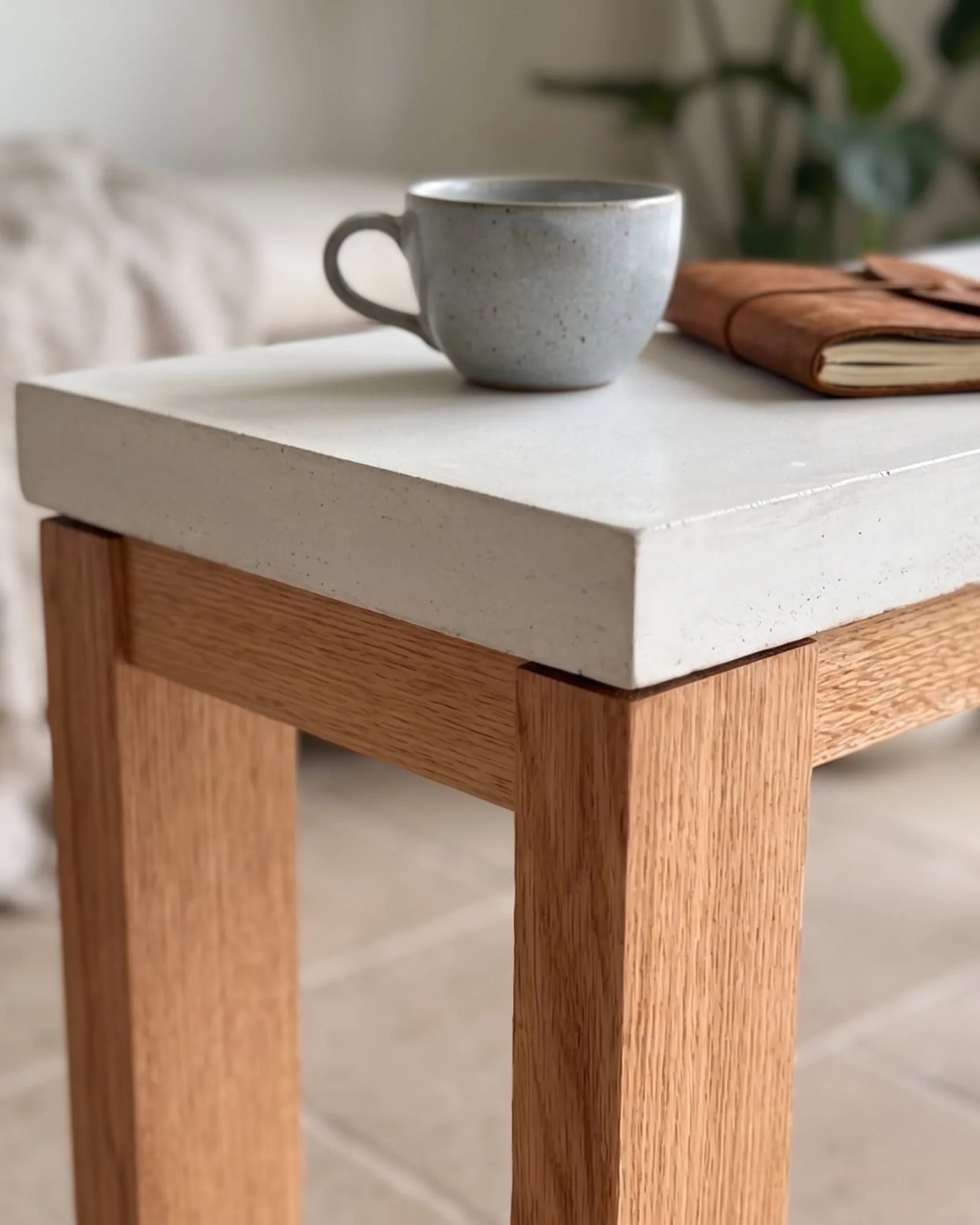
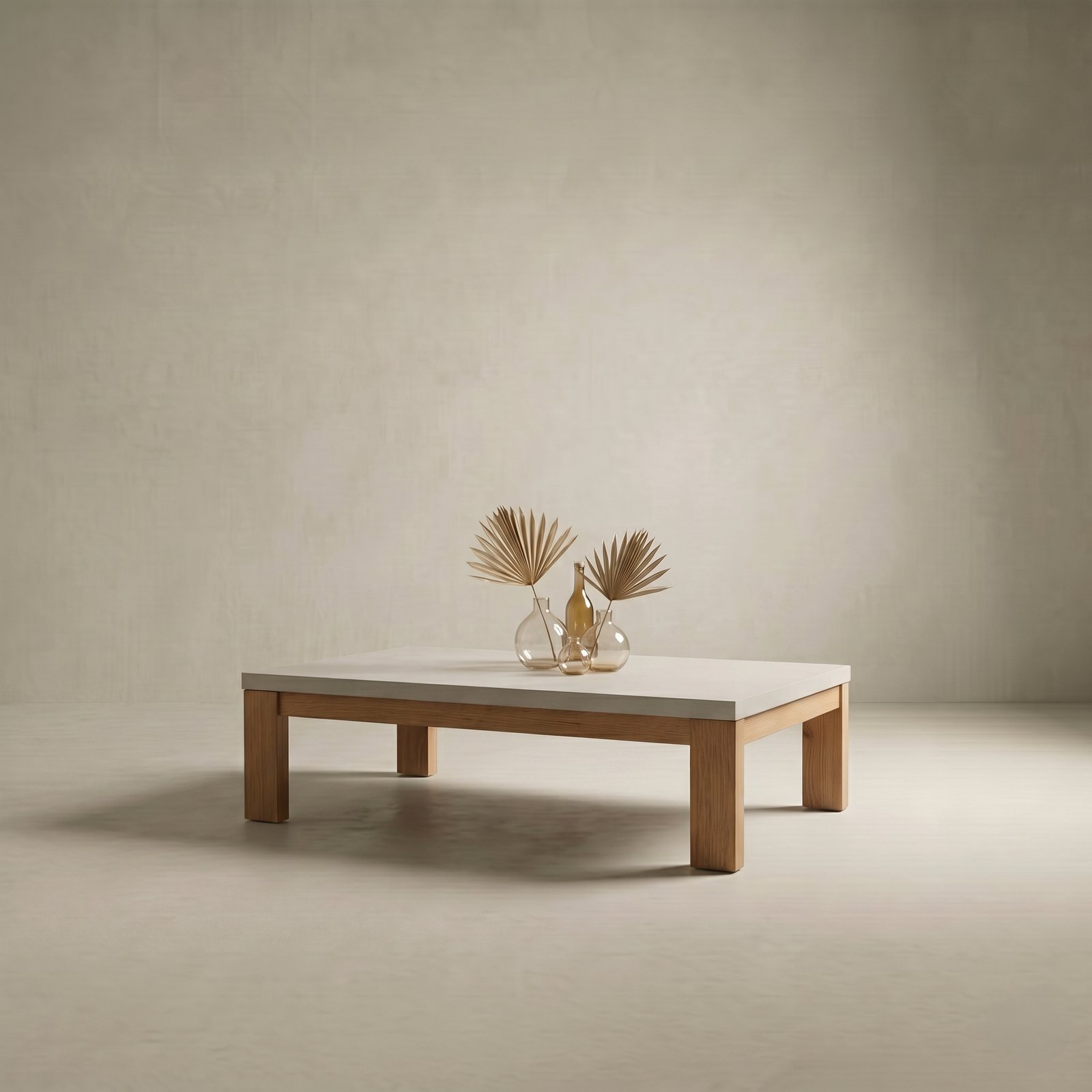
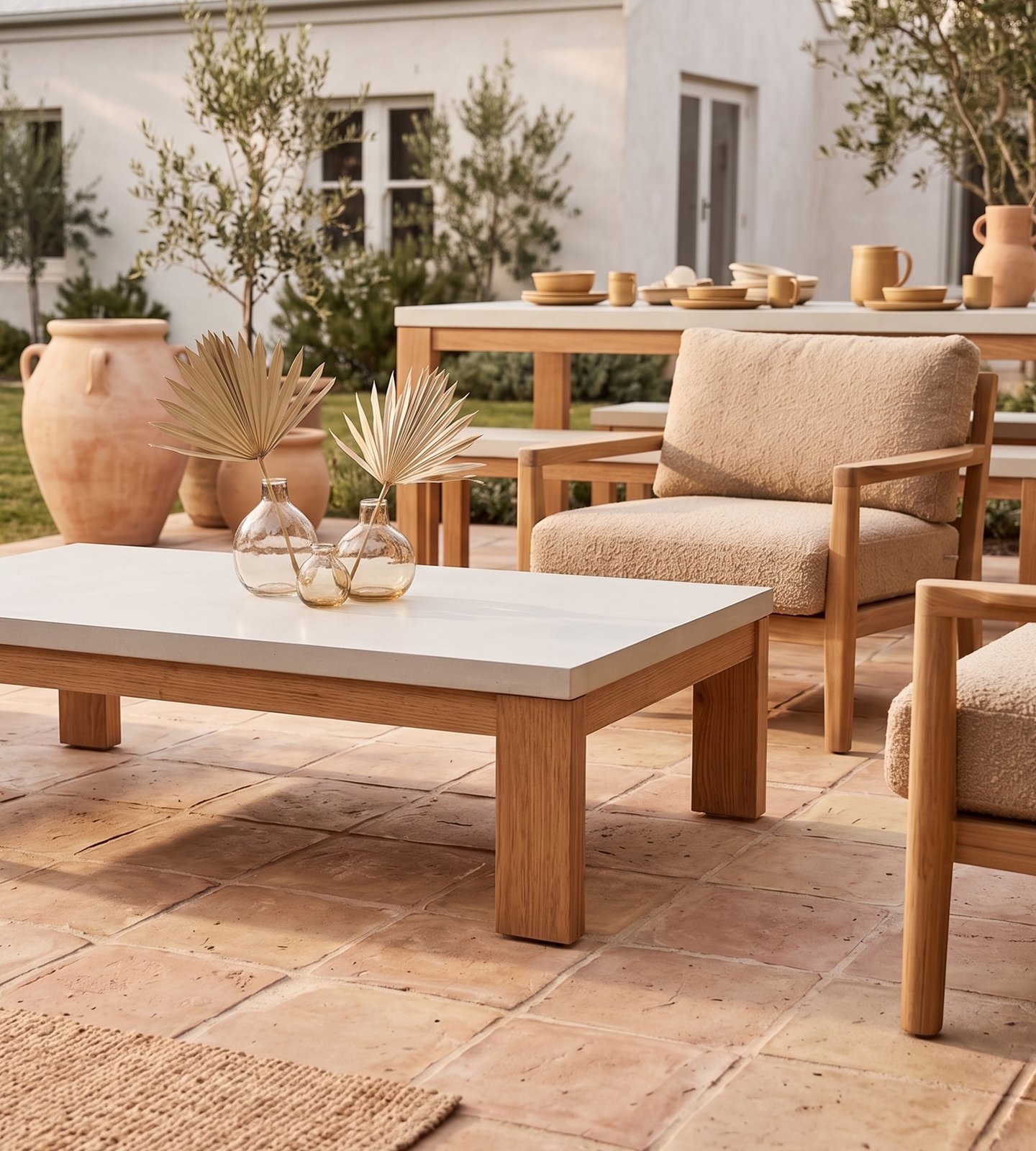
Rectangular gives you more usable surface and lines up better with a long sofa or an L-shaped lounge. The Laconian coffee table is our rectangular concrete coffee table, cast at 1000, 1200, 1300 or 1400 mm long in widths of 700, 800 or 900 mm. The top is 50 mm, on a hand-finished Tasmanian oak beam base in a natural finish.
Same mix and same sealer as the dining range — a smaller piece, not a lesser one. The white version is the Laconian white.
View the Laconian Coffee Table ›03 / Use
Outdoor Concrete Coffee Tables
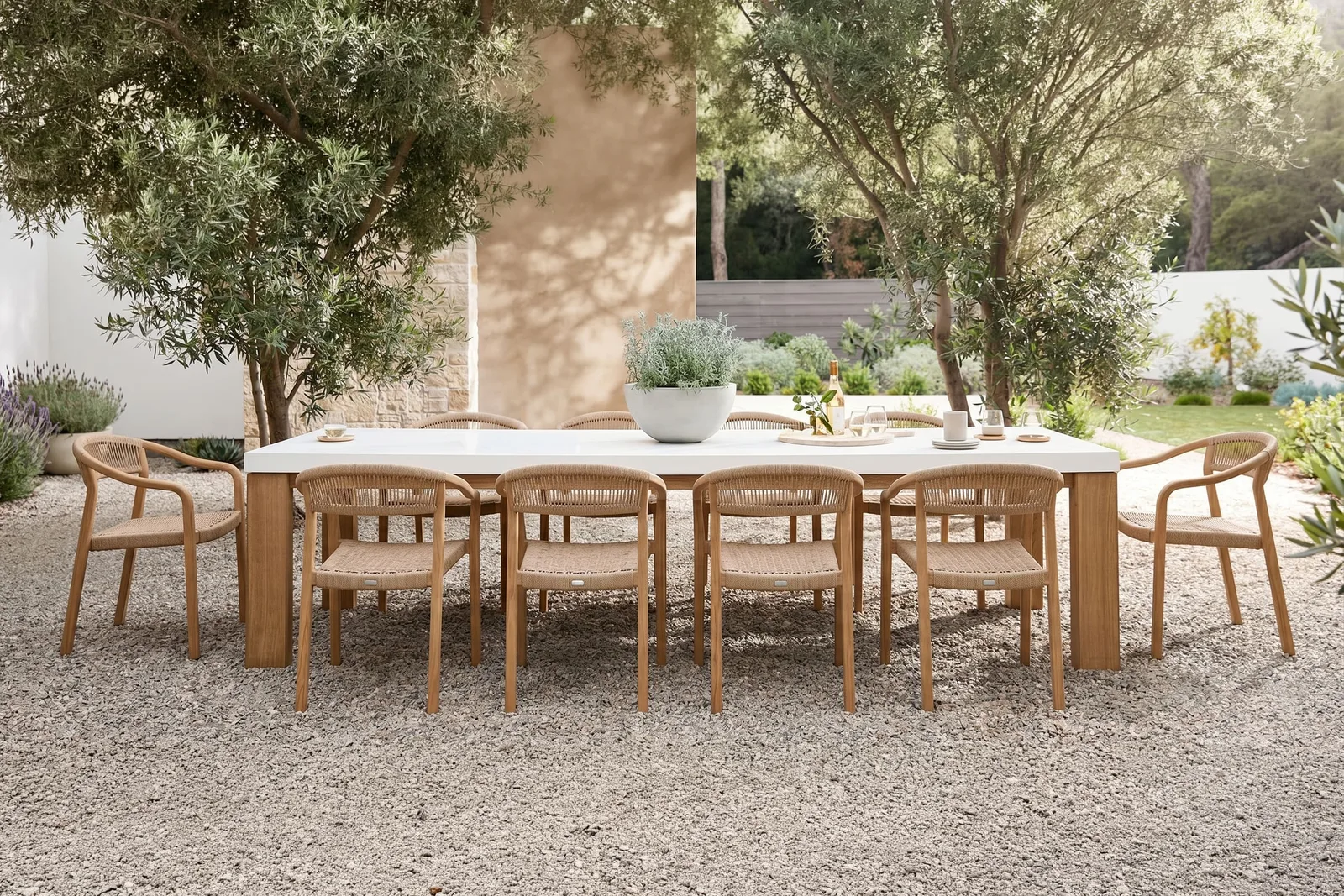
The slab doesn't change indoors or out. The base does. The Milano sits on a concrete base and handles a courtyard or covered terrace with no change in spec. The Laconian is on Tasmanian oak, which belongs inside or under cover — oil it once a year if it lives in a covered alfresco. The composition is freeze-thaw stable and our colours are UV-stable, so a table on a north-facing terrace holds its tone and a cold snap won't trouble it. What we'd avoid is leaving any piece standing in Australian winter rain year-round with no cover. For the full outdoor view across dining, coffee, side and bench, see our concrete outdoor tables page.
See All Outdoor Concrete Coffee Tables ›04 / Pigment
White Concrete Coffee Tables
A white concrete coffee table reverses the usual associations: bright, calm, more Santorini than industrial. The Milano white concrete coffee table is the round-format white in the range; the Laconian white is the rectangular version on a Tasmanian oak base. Colour goes through the mix rather than onto the surface, so the white is the material rather than a coating on it. Pairs naturally with timber, oak and linen interiors.
View the Milano White Concrete Coffee Table ›05 / Specification
Sizes and dimensions.
Milano — round
| Diameter | Height | Top |
|---|---|---|
| Ø 1000 mm | 350 mm | 40 mm |
| Ø 1100 mm | 350 mm | 40 mm |
| Ø 1200 mm | 350 mm | 40 mm |
A 60 mm top is available on the Milano if you want a heavier read. The base is concrete in the same colour as the top, satin finish.
Laconian — rectangular
Lengths of 1000, 1200, 1300 and 1400 mm, in widths of 700, 800 or 900 mm. The top is 50 mm, on a Tasmanian oak beam base in a natural finish.
Every size is cast to order, so the dimensions above are starting points rather than a stock list. If the size you need sits between them, ask.
06 / Getting it right
Choosing the right size for your room.
Three rules do most of the work.
Length. Aim for roughly two-thirds the length of your sofa. Against a three-seater, a 1200 mm Laconian or an Ø1100 Milano lands about right.
Height. Match your sofa's seat height, or sit up to 50 mm below it. The Milano's 350 mm suits most contemporary lounges, which tend to sit between 380 and 430 mm.
Clearance. Leave 350 to 450 mm between the sofa and the table — close enough to reach a cup, far enough to get past. Keep 600 mm of walkway on any side people move through.
Round works harder in tight rooms and around small children. Rectangular gives you more usable surface and lines up better with a long sofa.
Material / The composition
What the concrete actually is.
It's GFRC — glass fibre reinforced concrete. Real architectural concrete, not a concrete-look composite or a resin blend. Silica-free, full-depth, never veneered, and roughly four times the flexural strength of standard concrete.
Traditional concrete gets its strength from aggregate and steel reinforcement, which is why a cast slab is so punishing to move. We replace both with high-performance polymers and glass fibre reinforcement. The result is about a third the weight of traditional concrete, with the flexural strength to take a knock — which is why a 40 mm Milano top can span more than a metre and still be a piece two people can carry through a doorway.
It's also less material, less waste and no harmful by-products. A more sustainable option than traditional concrete, and a more practical one in an apartment.
Our blend comes from materials that vary in nature. Tonal movement, the odd pinhole, slight variation between two tables ordered the same week — that's the material, and we treat it as part of the piece rather than a fault. No two are identical.
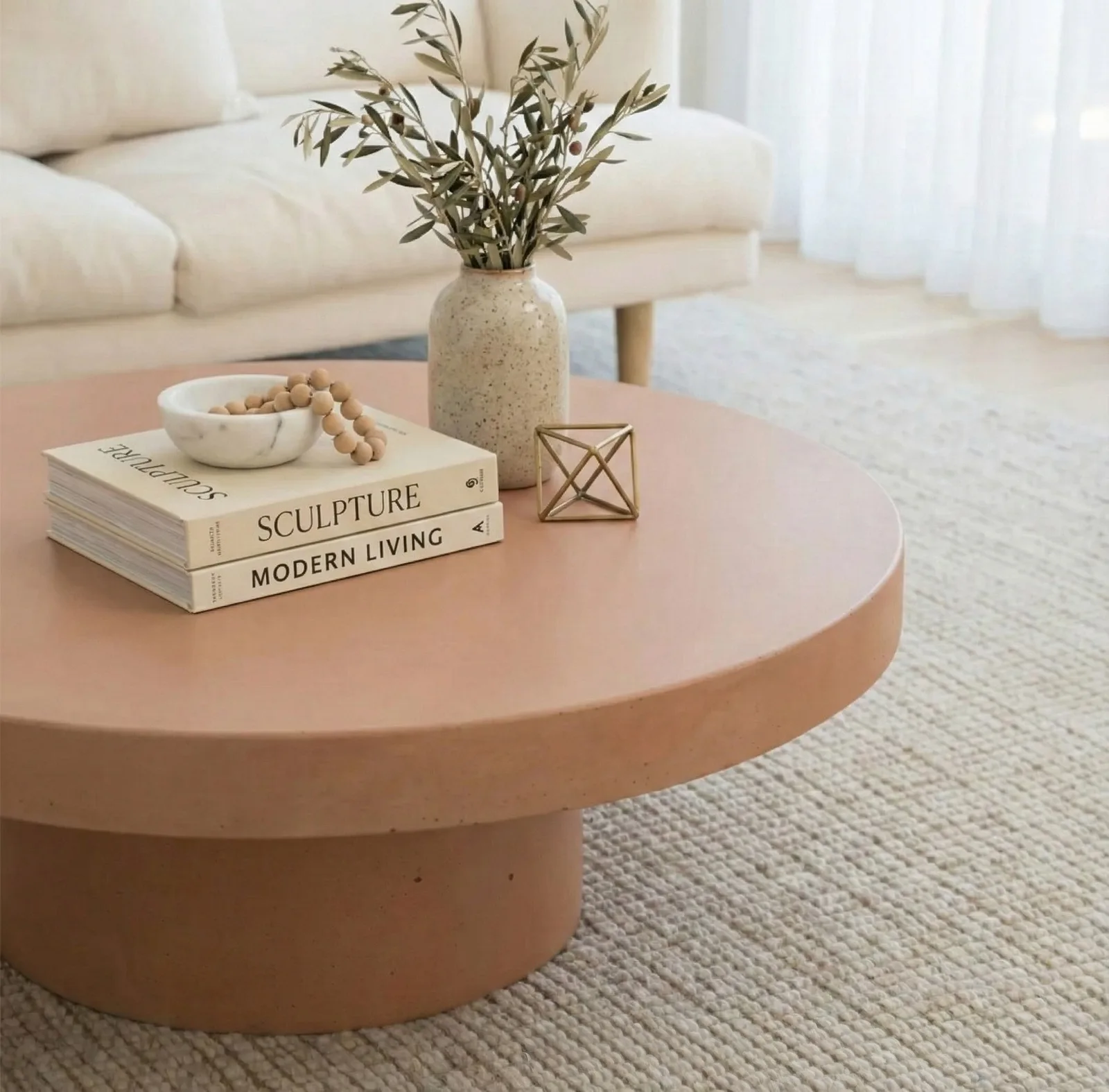
07 / Colour
See the colour before you commit.
Colour goes through the mix rather than onto the surface, so what you choose is the material, not a coating on top of it.
Screens lie about concrete. Order sample swatches and look at them in the room they're going into, at the time of day you actually use it — a colour that reads warm under downlights can go flat by a window.
Contact us to order sample swatches. We refund the cost once you order the piece, so getting the colour right ends up costing you nothing but the wait for the post. If nothing in the range is right, we'll mix to a custom colour.
See the Colour Range ›08 / Care
Care, cleaning and sealing.
Every piece ships with a satin food-safe sealer that resists red wine for six hours — long enough that a spill during dinner is a wipe, not a stain.
Day to day: a damp cloth. For anything more, warm water and a pH-neutral cleaner.
Skip the abrasive pads and anything bleach-based — they'll dull the satin. Wipe up citrus, oil and red wine when you notice them rather than the next morning. Use a mat under anything straight off the stove.
Hairline movement in the surface over years is cosmetic, not structural. It's concrete.
09 / Custom
Custom sizes.
Both formats are cast to order, so a custom size is a change of mould, not a special project.
Tell us the footprint you're working to and we'll come back with a price and a lead time. Most custom coffee tables still land inside the four to six week window.
We've done this for apartments in South Yarra where the lift set the maximum dimension, and for a Sorrento house that wanted the table to match a window reveal.
Common Questions
Concrete coffee tables: what people ask.
-
Do concrete coffee tables need to be sealed? +
Ours arrive sealed. Every piece carries a satin food-safe sealer that resists red wine for six hours — long enough that a spill during dinner is a wipe, not a stain. There's nothing to apply on delivery.
-
Do concrete coffee tables stain? +
Sealed, they resist the usual offenders. Wipe up citrus, oil and red wine when you notice them rather than the next morning, and use a mat under anything straight off the stove.
-
How heavy is a concrete coffee table? +
Lighter than you'd expect. Traditional concrete gets its strength from aggregate and steel reinforcement, which is what makes a cast slab so punishing to move. We replace both with high-performance polymers and glass fibre, so our pieces run at about a third the weight of traditional concrete. Two people can carry one through a doorway.
-
Can a concrete coffee table live outside? +
The Milano sits on a concrete base and handles a courtyard or covered terrace without any change in spec. The Laconian is on Tasmanian oak, which belongs inside or under cover — oil it once a year if it lives in a covered alfresco. Our colours are UV-stable either way.
-
Do concrete coffee tables crack? +
Glass fibre reinforcement gives the material high flexural strength, so it takes a knock that would chip a traditional cast slab. Fine surface movement over years is cosmetic rather than structural. It's concrete, and we treat that character as part of the piece.
-
How do you clean a concrete coffee table? +
A damp cloth day to day. For anything more, warm water and a pH-neutral cleaner. Skip abrasive pads and anything bleach-based — they'll dull the satin finish.
-
What size coffee table do I need? +
Roughly two-thirds the length of your sofa, at or just below seat height, with 350 to 450 mm of clearance between the two. Against a standard three-seater, a 1200 mm Laconian or an 1100 mm Milano lands about right.
-
Round or rectangular? +
Round works harder in tight rooms and around small children — no corners at shin height. Rectangular gives you more usable surface and lines up better with a long sofa or an L-shaped lounge.
-
Can I buy a coffee table online or do I have to enquire? +
Coffee tables are the only pieces in the studio range you can buy outright through the website: direct checkout, with flat-rate metropolitan shipping. Larger pieces such as dining tables and benchtops are quoted by the studio.
-
What's the lead time, and can I get a size that isn't listed? +
Four to six weeks from sign-off, made in Australia. Both formats are cast to order, so a size outside the listed range is a change of mould rather than a special project — tell us the footprint and we'll come back with a price. Most custom coffee tables still land inside the same window.
Related / Other collections